
The Art of Solihiya: How Filipino Weavers Inspire Modern Fashion
Discover how the centuries-old solihiya weave from the Philippines is finding new life in contemporary fashion and accessories, connecting Filipino heritage to global design.
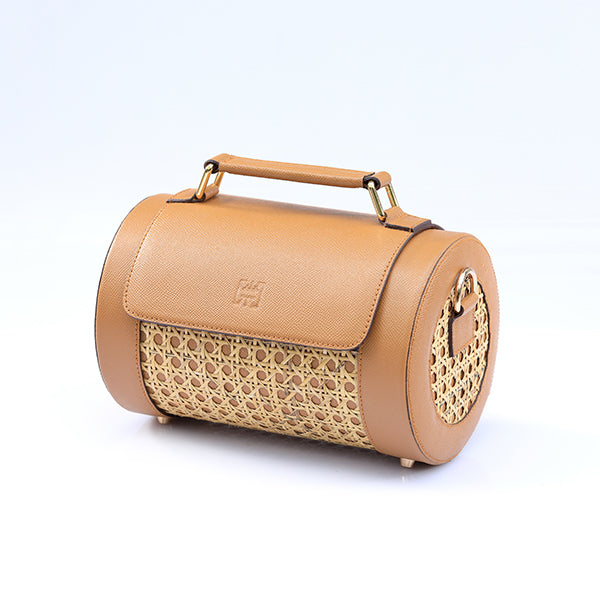
There is a pattern that has endured for centuries across the Philippine archipelago. Woven into furniture, church windows, and the everyday objects of Filipino life, the solihiya weave carries a quiet geometry that speaks of patience, precision, and cultural memory. Today, this ancestral craft is experiencing a remarkable renaissance in the world of contemporary fashion.
What is Solihiya?
Solihiya (also spelled “solihia”) is a traditional Filipino weaving technique that uses thin strips of rattan, buri palm, or other natural fibers to create a distinctive hexagonal or diamond-patterned lattice. The name itself is believed to derive from the Spanish word “celosia,” referring to a type of latticed window screen that was common in colonial-era Filipino homes.
Walk through any heritage house in Vigan, Taal, or Silay, and you will find solihiya in the chair backs, window panels, and room dividers. The pattern is so embedded in Filipino domestic life that most Filipinos encounter it daily without recognizing its cultural significance. Every barbershop chair, every lola’s rocking chair, every waiting room bench with that familiar crosshatch pattern owes its seat to this weaving tradition.
The Weavers of Pangasinan
In the province of Pangasinan, along the western coast of Luzon, communities of weavers have maintained the solihiya tradition for generations. These artisans work primarily with buri palm strips, harvesting the leaves, sun-drying them, cutting them into uniform widths, and then meticulously weaving each strip over and under in the precise sequence that creates the hexagonal pattern.
The process is entirely manual. A single chair seat can take a skilled weaver several hours to complete, and the tension must remain consistent throughout to ensure the pattern holds its shape over years of use. The weavers develop calluses on their fingers and an intuitive sense of spacing that no machine can replicate.
What makes these artisans remarkable is not just their technical skill but their role as cultural custodians. In an era when younger generations increasingly move to cities for employment, these weavers represent a living link to a craft that predates the colonial period. Their knowledge passes through demonstration and practice, not manuals or curricula.
From Furniture to Fashion
The leap from furniture weaving to fashion may seem dramatic, but it follows a logical creative trajectory. Designers working with Filipino heritage have long looked to traditional crafts for material innovation. The challenge has always been translating a technique designed for rigid furniture frames into the flexible, wearable context of bags, accessories, and garments.
At ORIAS Studios, this translation has been a central creative project since the brand’s founding. The Solihiya collection of bags and accessories adapts the weaving pattern using leather strips and mixed materials, preserving the geometric integrity of the traditional pattern while introducing durability, water resistance, and the tactile quality that modern consumers expect from luxury goods.
The key insight was recognizing that solihiya is not merely decorative. The hexagonal lattice creates a structurally sound surface that distributes weight evenly and allows airflow, qualities that happen to be ideal for bags designed for Manila’s tropical climate. Form and function converge in a way that feels inevitable rather than forced.
Why This Matters for Filipino Fashion
The global fashion industry has spent the past decade reckoning with questions of cultural authenticity, sustainable production, and the value of handcraft in an industrialized world. Filipino weaving traditions like solihiya offer compelling answers to all three.
Cultural authenticity emerges naturally when a brand works directly with the communities that originated a technique. There is no appropriation when the artisans are partners and co-creators rather than anonymous suppliers. The weavers of Pangasinan are not a supply chain footnote; they are essential collaborators whose expertise shapes the final product.
Sustainability is inherent in the materials and methods. Buri palm is a renewable resource that grows abundantly across the Philippines. The weaving process requires no electricity, no synthetic chemicals, and no industrial waste. When leather is introduced for fashion applications, the weaving technique itself ensures minimal material waste, since each strip is used in its entirety.
The value of handcraft becomes self-evident when you hold a solihiya-woven piece. The slight variations in tension, the subtle differences between one weaver’s hand and another’s, the warmth of natural materials against skin: these are qualities that mass production cannot simulate. In luxury fashion, where clients pay for distinction and narrative, this irreproducibility is the ultimate value proposition.
The Broader Context of Filipino Textile Arts
Solihiya exists within a rich ecosystem of Filipino textile traditions. The inabel of Ilocos, the t’nalak of the T’boli, the hablon of Panay, the pina cloth of Aklan, and dozens of other regional weaving traditions create a textile heritage as diverse as the archipelago itself.
What distinguishes solihiya from many of these traditions is its association with everyday life rather than ceremonial use. While t’nalak and pina are reserved for special occasions and formal garments, solihiya is democratic. It appears in the most ordinary contexts, which is precisely what makes its elevation to luxury fashion so compelling. It suggests that beauty and craft were always present in Filipino daily life, waiting to be recognized.
Looking Forward
The integration of solihiya into contemporary fashion is still in its early chapters. Designers continue to experiment with scale, material combinations, and application contexts. Some are exploring solihiya as a construction technique for garment panels. Others are investigating how the pattern translates to digital textile printing while maintaining its handwoven character.
For the weavers themselves, the fashion market represents both opportunity and responsibility. Increased demand brings economic benefit to communities that have historically been undervalued, but it also raises questions about scale, quality control, and the preservation of technique in the face of commercial pressure.
The most thoughtful approach, and the one that ORIAS and similar brands pursue, is slow scaling that prioritizes weaver welfare and craft integrity over volume. Each piece takes time. Each weaver works at their own pace. The result is a product that carries genuine human investment, the kind of quiet luxury that speaks through material and making rather than logos and marketing.
In a world oversaturated with fast fashion and disposable goods, the solihiya weave offers something increasingly rare: an object with a story older than any brand, made by hands that have perfected their art over a lifetime, designed for a future that honors its past.
Experience ORIAS
Discover our collections of bespoke tailoring and artisan-made accessories.